

The political world is more divided than ever. So we thought democracy should begin with young minds.
Not by teaching them what to think,
but how to disagree, listen, question, and remain human.
So we created Democracy in Progress—
to plant the seeds of the art of disagreement in a new generation.
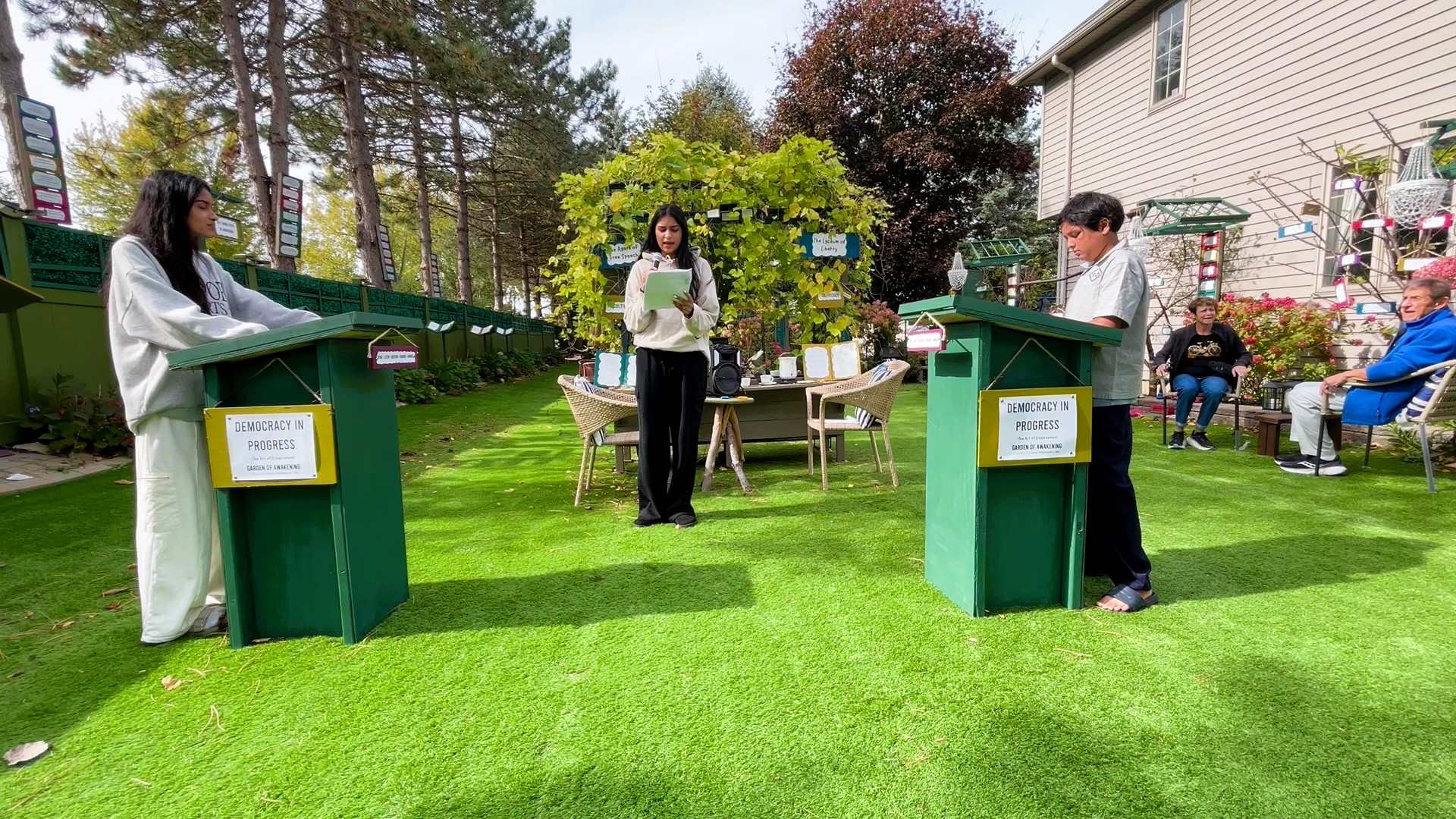
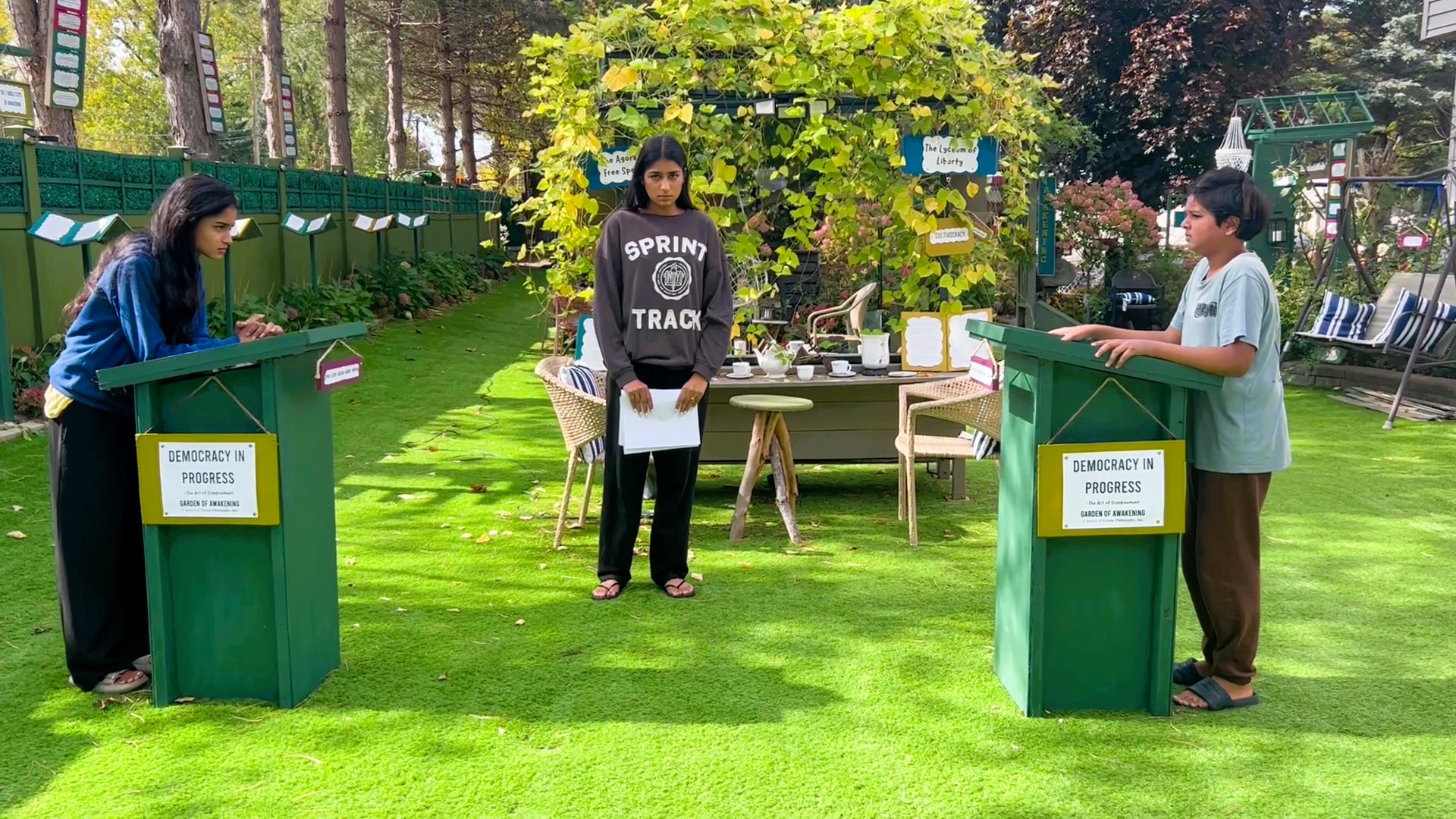
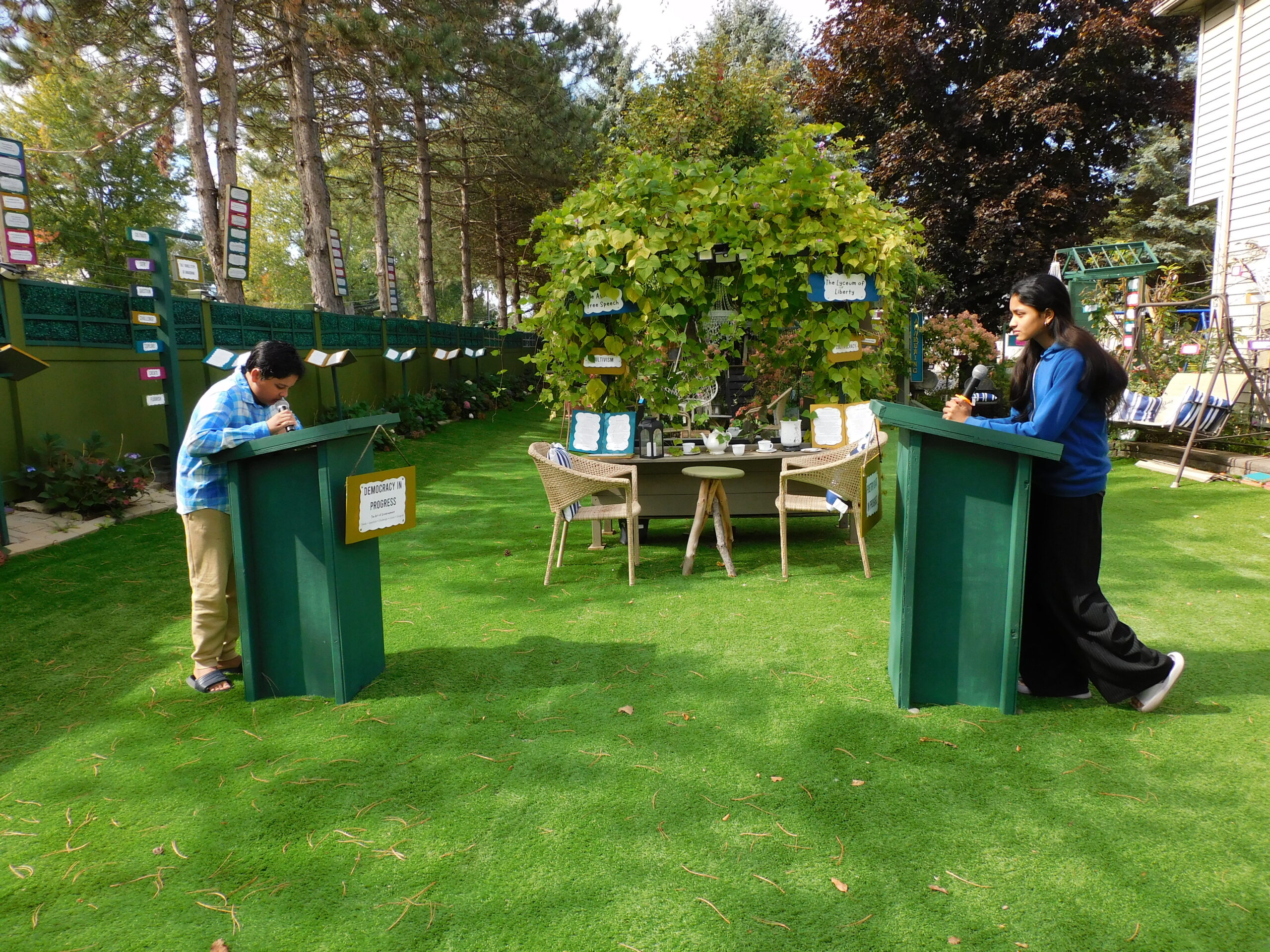
Two podiums.
Two opposing ideas.
No enemies.
At Garden of Awakening, we do not put democracy behind glass.
We bring it out into the garden—
beneath the open sky, among the trees, light, wind, and soil.
We put it between two podiums.
We give disagreement a place to stand.
We give opposing ideas a voice.
We give listening equal weight with speaking.
And then—
we let democracy practice.
WHY DEMOCRACY IN PROGRESS?
Because we have become remarkably good at having opinions
and increasingly poor at having disagreements.
We block.
We label.
We retreat into our corners.
Algorithms learn what we already believe and generously deliver more of it.
But democracy asks something much harder:
Can you remain in the conversation with someone who sees the world differently?
Democracy in Progress begins there.
Not with agreement.
Not with winning.
With the courage to disagree without dehumanizing.
Here, disagreement is not treated as a crack in democracy.
It is where democracy begins.
THE GARDEN BECOMES AN AGORA
There are no television panels here.
No shouting match.
No applause meter.
No winner declared.
Instead, beneath the open sky, two people step toward opposing podiums.
One proposition stands between them.
One speaks.
The other listens.
Then the argument crosses the space.
Back and forth.
Question.
Response.
Counterpoint.
Reflection.
Until something unusual begins to happen:
we stop watching two sides
and begin watching two humans think.
The garden becomes an agora.
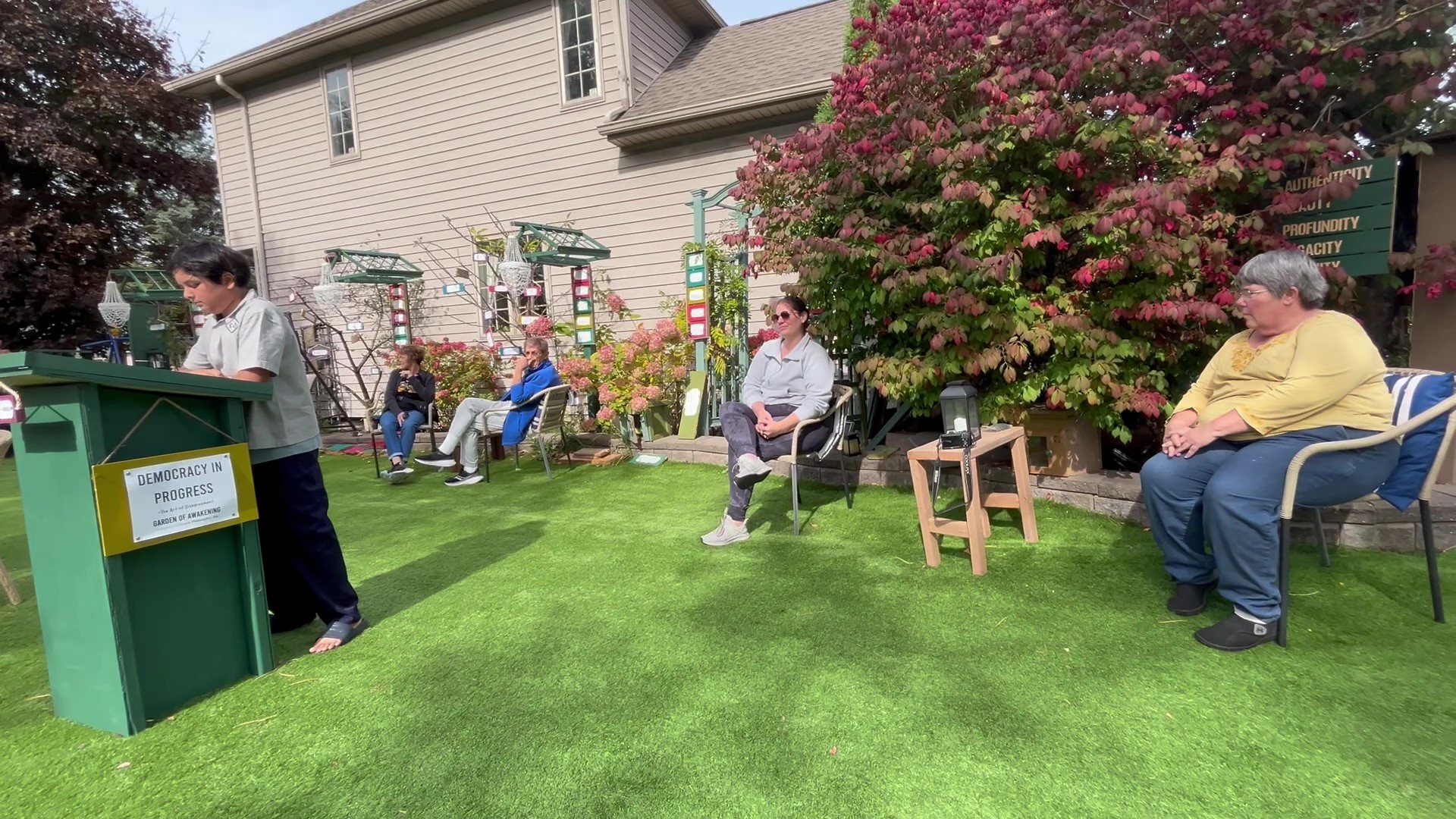
The audience becomes a witness.
And disagreement becomes an art again.
HOW THE PROGRAM WORKS
THE PROPOSITION
Every dialogue begins with one difficult question or proposition—something worth disagreeing about.
THE TWO PODIUMS
Two participants take opposing positions. Their task is not to perform outrage, but to make the strongest human and intellectual case they can.
THE DIALOGUE
Arguments travel point-to-point. Each participant must listen closely enough to respond to what was actually said—not merely wait for another turn to speak.
THE AUDIENCE
Visitors do not come merely to watch.
They listen.
Question.
Reflect.
And sometimes discover that certainty has moved a few inches.
NO WINNER
There is no scoreboard.
Because the purpose is not to discover who defeated whom.
The purpose is to discover whether two opposing humans can leave the conversation still human to one another.
THE FINAL ACT
At the end, the podiums are left behind.
The opponents step toward one another.
Perhaps a handshake.
Perhaps a smile.
Perhaps still complete disagreement.
That is enough.
Because democracy does not require us to think alike.
It asks whether, after everything has been argued—
we can still meet in the middle as humans.
DEMOCRACY IN PROGRESS
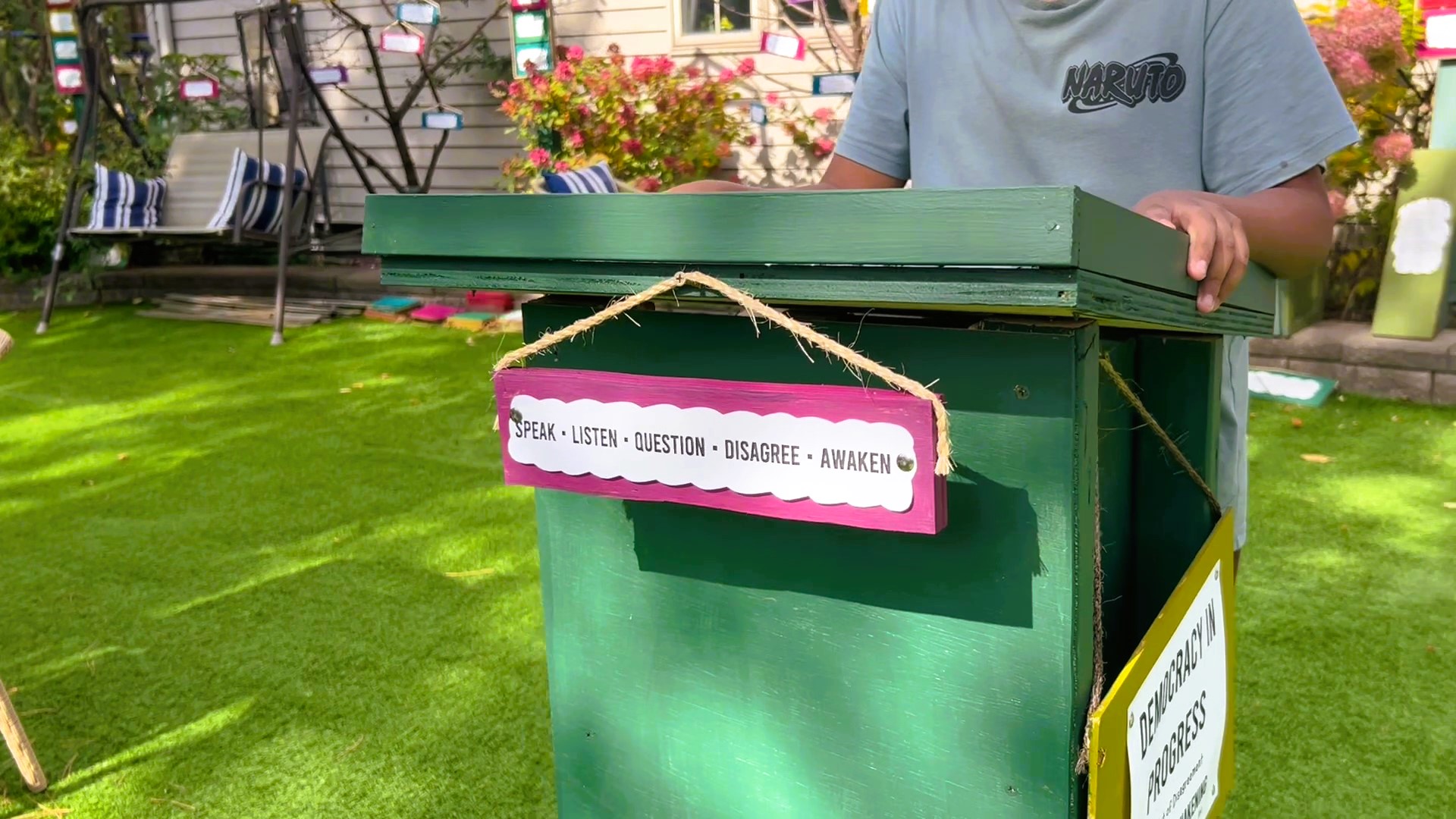
Speak • Listen • Question • Disagree • Awaken
Democracy is not something we inherit finished.
It is something we practice—together.